What Facebook’s Latest Algorithm Update Means for Your Business
Last month, Facebook dropped news of its latest algorithm update, and it’s making businesses a little nervous.
Here’s the gist of the update, straight from the horse’s mouth (Mark Zuckerberg’s own Facebook profile):
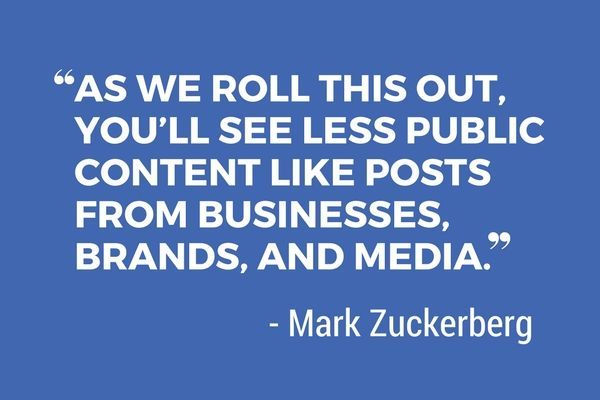
“ I’m changing the goal I give our product teams from focusing on helping you find relevant content to helping you have more meaningful social interactions…As we roll this out, you’ll see less public content like posts from businesses, brands, and media. ”
In other words, Facebook is getting away from filling the Newsfeed with posts from companies. Instead, it’s going to serve up more content from friends and family, in hopes of facilitating more “meaningful connections.”
Some Facebook users are welcoming this change. Facebook decided to instigate it after a study found that many users felt crummy after using the social media platform. That crummy feeling was connected to scrolling along passively without interacting with content.
But in that same study, when users had “meaningful social interactions” with friends and family, they felt good after using Facebook. The algorithm update is intended to make people feel good on Facebook more often.
What’s unclear is how the update will affect the small and large businesses that use Facebook to keep in front of their customers.
How Businesses Can Adapt to Facebook’s Algorithm Update
In the past, businesses have been able to adapt to Facebook’s updates, even drastic ones. We all recall the update a couple of years ago when Facebook killed organic reach, forcing businesses to “boost” posts and use paid ads if they hoped to build an audience.
This time around, I’m confident there will be ways for businesses to stay relevant. In the post I quoted earlier, Zuckerberg goes on to hint that businesses could retain their audiences if they change the way they’re posting.
“And the public content you see more will be held to the same standards – it should encourage meaningful interactions between people.”
If your content encourages a “passive experience,” you should expect to reach fewer people going forward. But if you start creating content that nurtures conversations, you’ll probably survive the algorithm update—and might even improve your performance.
As a result, businesses should focus their efforts on content that inspires real conversations between people, things like:
- Live videos
- Group participation
- Articles people comment on
- Personal content like team photos and office updates
- Value-rich content such as discounts, specials and giveaways
Keep in mind, too, that Facebook hasn’t commented yet on how this update will actually interact with paid advertising. It could be that ad dollars just won’t spend as efficiently when posts don’t generate engagement, which is already true. The effect may just become more pronounced.
Finally, Facebook may hope to shift businesses toward new features like Facebook Local, which will emulate sites like Foursquare and Yelp. Facebook Local could end up working more powerfully to attract customers than pages anyway, so I wouldn’t jump ship on Facebook just yet.
Need help staying on top of the latest Facebook and Google updates? Our team makes sure your business is doing what it should to maintain a visible online presence. Talk to us about getting in front of your customers !
The post What Facebook’s Latest Algorithm Update Means for Your Business appeared first on GetPhound.